
Gregorian Masses: A venerable tradition, newly within reach
Gregorian Masses are a time-honored Catholic tradition: thirty Masses offered on thirty consecutive days for the repose of a deceased person’s soul. They are a steady act of intercession, rooted in the Church’s long practice of praying for the dead and associated with St. Gregory the Great. In Sacramentum, parishes can optionally enable Gregorian Mass requests, and the system’s scheduling algorithm calculates the earliest possible 30-day consecutive window based on your parish’s Mass schedule, priest availability, and existing intentions, so the series can be fulfilled faithfully and without gaps.
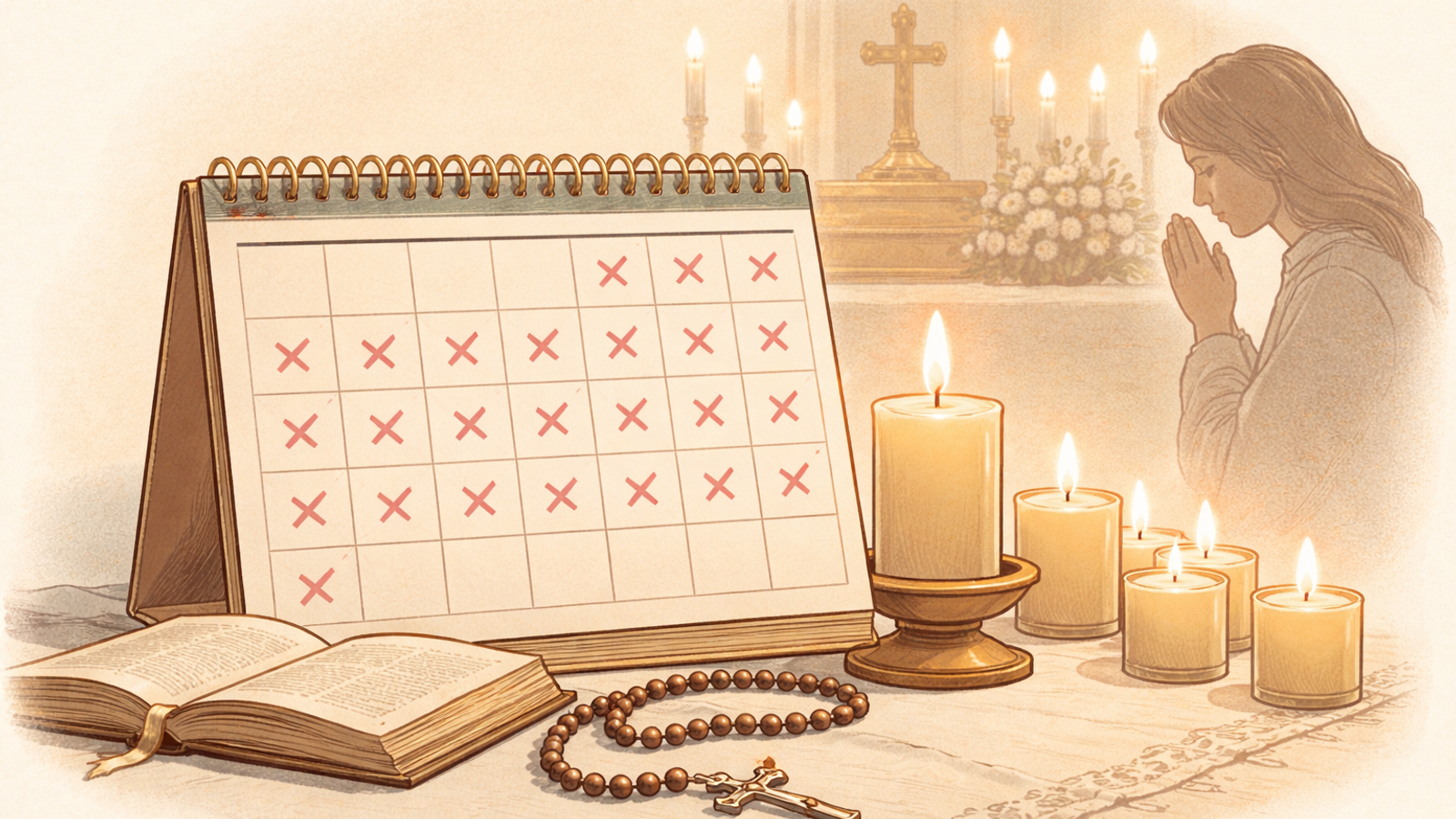
Some Catholic customs feel like old stone steps, worn smooth by centuries of faithful feet. Gregorian Masses are one of those steps.
Many Catholics have heard the phrase, often in the context of praying for the dead: “a set of Gregorian Masses.” But what exactly are they? Where did this tradition come from? And how can a parish handle them well, without turning the sacristy and the parish office into a scheduling battlefield?
Let’s walk through it.
What are Gregorian Masses?
A Gregorian Mass (more commonly, Gregorian Masses) refers to a series of 30 Masses offered on 30 consecutive days for the repose of a deceased person’s soul.
The key features are simple, and that simplicity is part of what makes the devotion beautiful:
- Thirty Masses
- For one deceased person
- On thirty consecutive days
- With the intention focused on that soul
In practice, the intention is traditionally kept “single-focused” for the series: you are not mixing names in the same series or swapping intentions midstream. The point is steady, faithful intercession, day after day, like the Church keeping vigil.
Where does the tradition come from?
The name “Gregorian” is connected to St. Gregory the Great (Pope Gregory I), who is associated with an ancient story about prayers and Masses being offered for a deceased monk, and the monk’s deliverance becoming known after a period of thirty days.
Over time, this formed a devotional tradition: the offering of thirty consecutive Masses for one deceased person as a particular act of charity and prayer for the departed. It’s not “magic” and it’s not a mechanical guarantee, but it is a concrete, sustained way for the Church to do what she has always done: commend the dead to God’s mercy and offer the greatest prayer we have, the Holy Sacrifice of the Mass.
If you’ve ever watched a family grieve, you already know why this resonates. Grief wants something it can do. Gregorian Masses give that grief a holy rhythm: one Mass today, and tomorrow again, and then again, until the offering has been made thirty times.
Why they’re pastorally powerful (and administratively hard)
The spiritual logic is straightforward. The administrative reality is not.
Gregorian Masses require consecutive-day scheduling, and that means real constraints:
- A priest’s existing intention book
- Parish Mass schedules and special liturgical days
- Travel, retreats, illness, funerals, school Masses
- Multiple priests with different availability
- The need to avoid accidental gaps that break the “consecutive days” requirement
In other words: they’re easy to explain in the bulletin, and surprisingly easy to botch in the calendar.
And when something is offered for a grieving family, “Oops, we accidentally skipped Wednesday” is not the kind of surprise anyone wants.
Gregorian Masses in Sacramentum
Sacramentum is built to respect Catholic reality as it is, not as we wish it were.
That’s why Sacramentum allows parishes to optionally enable requests for Gregorian Masses. Some parishes offer them routinely. Others offer them only under certain conditions. Some prefer to handle them manually. Whatever your parish practice is, Sacramentum can match it.
When enabled, parishioners can submit a request specifically for Gregorian Masses, rather than trying to squeeze a 30-day consecutive series into a standard “single intention” request form.
This is important: it keeps the request clear, the expectations clear, and the process consistent.
The scheduling challenge, solved with a real algorithm
Here’s the part most people never see: the “calendar math” behind Gregorian Masses is not trivial if you want to do it responsibly.
Sacramentum includes a sophisticated scheduling algorithm that calculates the earliest available window in which a full set of 30 consecutive Masses can be offered, based on your parish’s real constraints and policies.
It’s doing the work a seasoned parish secretary does instinctively, but at scale, and without the risk of missing a conflict.
Under the hood, the system:
- Looks at the parish’s Mass schedule and priest availability
- Accounts for existing Mass intentions already assigned
- Checks for conflicts and rules you set (for example, limits per priest, per day, or how intentions are distributed)
- Searches forward on the calendar to find a continuous 30-day span where the series can be fulfilled cleanly
- Produces the earliest feasible start date (and therefore the complete window)
So instead of guessing, backtracking, erasing, and re-writing, the parish can confidently say: this is the earliest start date we can honor, and this is how the series will be scheduled.
It’s not flashy. It’s just the kind of quiet competence the parish office deserves.
A tradition worth keeping, handled with care
Gregorian Masses are a beautiful reminder that the Church does not abandon her dead. She accompanies them with prayer, and she offers the Mass, again and again, with patience and hope.
Sacramentum exists to support that kind of fidelity, not replace it.
If your parish offers Gregorian Masses, enabling them in Sacramentum helps you provide a clear path for parishioners and a reliable process for staff and clergy. If your parish is considering offering them, Sacramentum makes it easier to do so without overloading the intention book or relying on fragile manual scheduling.
Because some traditions are too important to leave to sticky notes and crossed-out calendars. 🕯️